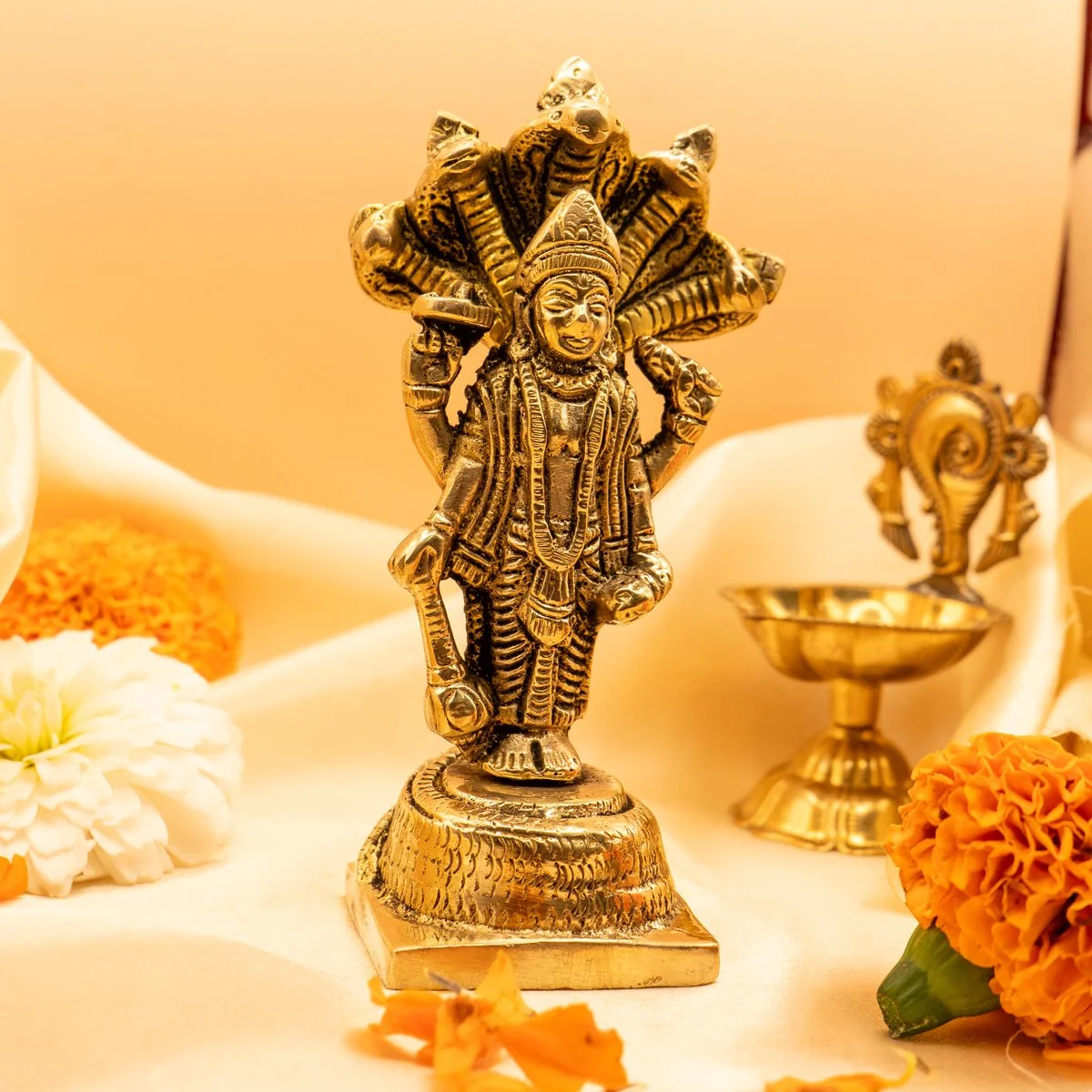
Dashavatar refers to the ten principal incarnations of Lord Vishnu, the preserver in the Hindu trinity. Each avatar appears at a crucial time to restore dharma, protect devotees and correct imbalance in the world. When these ten forms are represented together in a brass idol set, devotees do not only see ten divine figures; they see a complete spiritual narrative of protection, evolution, wisdom and divine intervention. For homes, temples, gift stores and religious retailers, a brass Dashavatar collection carries both devotional value and timeless visual appeal.
At Deshna Wholesale, Khatauli, Muzaffarnagar, Uttar Pradesh, buyers often look for deity sets that combine scriptural meaning with long lasting craftsmanship. A well made Dashavatar set does exactly that. If you want to explore available deity models, sizes and finishes, you can browse the Deshna Wholesale brass idol catalog for Vishnu forms and coordinated spiritual collections.
Why the Dashavatar tradition matters
The story of the ten avatars shows how the Divine responds according to the need of the age. The sequence is also read by many devotees as a symbolic journey from water to land, from instinct to discipline, from royal virtue to divine wisdom. In worship, Dashavatar reminds the mind that one supreme force protects the universe in many forms. A brass set becomes especially meaningful because it allows the complete cycle of Vishnu avatars to be kept in one altar arrangement.
The ten avatars of Vishnu and their significance
- Matsya – the fish avatar. Matsya rescues the Vedas and protects life from the great flood. This form represents preservation of sacred knowledge and divine guidance during chaos.
- Kurma – the tortoise avatar. During Samudra Manthan, Kurma supports Mount Mandara on the cosmic ocean. Kurma teaches stability, patience and the strength to hold great responsibility.
- Varaha – the boar avatar. Varaha lifts Mother Earth from the depths after defeating Hiranyaksha. This avatar symbolizes rescue, grounding and the victory of righteousness over arrogant power.
- Narasimha – the man lion avatar. Narasimha appears to protect Prahlad and destroy the tyranny of Hiranyakashipu. This fierce form represents immediate divine protection when devotion is under attack.
- Vamana – the dwarf Brahmin avatar. Vamana humbles King Bali with three cosmic steps and restores balance between the worlds. This form shows that humility can carry limitless spiritual authority.
- Parashurama – the warrior sage with the axe. Parashurama corrects the misuse of power and reminds humanity that strength must remain under discipline and dharma.
- Ram – Maryada Purushottam. Lord Ram is the ideal king, son, husband and ruler. His avatar teaches integrity, duty, truthfulness and noble conduct in every relationship.
- Krishna – the complete divine guide. Krishna brings bhakti, wisdom and joyful divine play, while also delivering the Bhagavad Gita. This avatar represents love, strategy, compassion and spiritual clarity.
- Buddha – the compassionate teacher. In Dashavatar tradition, Buddha represents inner awakening, non violence, self reflection and the calming of restless desire.
- Kalki – the future avatar. Kalki is expected to appear at the end of Kali Yuga to end adharma and renew cosmic order. This form stands for hope, purification and final restoration.
When these ten forms are placed together, the arrangement becomes a powerful teaching tool for children, a meaningful altar for devotees and a premium display set for spiritual retailers. Buyers who need a particular finish, size combination or coordinated packaging can also request specifications through the custom order page.
Why brass is the ideal metal for Dashavatar idols
Brass has been preferred in Indian worship for centuries because it is durable, auspicious and visually radiant. A Dashavatar set is not a temporary decorative item. It is often placed in home temples, meditation rooms, shops, religious counters and temple spaces for years. Brass withstands daily handling, seasonal cleaning and regular puja much better than fragile materials. It also develops a rich devotional character over time.
Another reason brass works beautifully for Dashavatar is detail. The ten avatars have very different iconographic features: Matsya with aquatic symbolism, Narasimha with a fierce face, Vamana in a humble ascetic form, Krishna with graceful divine beauty and Kalki with a warrior future energy. Brass casting allows these distinctions to remain visible. This makes the set more meaningful for worship and more attractive for display.
From a practical business perspective, brass is also ideal for wholesalers and retailers because it carries traditional value, is easier to maintain than many mixed materials and suits gifting, festive sales and temple supply. A polished or antique finish can make the same Dashavatar set appeal to different customer preferences.
How to arrange a Dashavatar set at home
A clean elevated altar is best for Dashavatar worship. Many devotees place the set in a straight line or gentle semicircle, keeping Ram and Krishna toward the center because these forms are especially familiar for daily bhakti. Another approach is to arrange the sequence from Matsya to Kalki from left to right, showing the spiritual progression of the ten incarnations. If the set includes one main Vishnu or Narayan murti, it can be placed centrally with the ten avatars around it.
- Keep the altar in a clean and quiet area, preferably the northeast or east facing worship space.
- Use a raised chowki or shelf rather than placing the idols directly on the floor.
- Offer flowers, tulsi, incense and a small diya during regular worship.
- Recite Vishnu Sahasranama, Dashavatar Stotra or simple Vishnu mantras according to your family tradition.
- Clean the brass idols gently with a soft dry cloth and avoid harsh chemicals before puja.
For retailers creating festive collections, Dashavatar can also be displayed in velvet lined boxes or grouped with Vishnu, Lakshmi and Garuda themed inventory for a stronger devotional story. You can view more related products in the online brass idol catalog.
Complete Dashavatar sets from Deshna Wholesale
Deshna Wholesale serves buyers who need dependable manufacturing from a brass god idol specialist in western Uttar Pradesh. Dashavatar sets are popular among puja stores, temple suppliers, gift businesses and online resellers because they combine scriptural depth with premium shelf appeal. A complete set can be ordered for regular resale, festive gifting, temple use or devotional family collections. Buyers often ask for coordinated sizing so all ten avatars look visually balanced when placed together, and that is where manufacturer level customization becomes valuable.
Because Dashavatar is a spiritually complete theme, it performs well as a curated product line rather than a single standalone idol. For wholesale buyers, this means better storytelling, better category depth and stronger interest from customers who want a meaningful brass set instead of only one deity form.
Final thoughts
The ten avatars of Vishnu represent protection across ages, situations and states of consciousness. Matsya saves knowledge, Kurma supports the cosmic task, Varaha rescues the earth, Narasimha protects devotion, Vamana restores humility, Parashurama corrects power, Ram establishes virtue, Krishna teaches wisdom, Buddha inspires compassion and Kalki promises renewal. In brass, this divine story gains permanence, dignity and worship worthiness. A Dashavatar set is therefore not only a sacred purchase but also a lasting spiritual inheritance for homes, temples and devotional businesses.