Makar Sankranti marks one of the most celebrated solar transitions in the Hindu calendar. Unlike many festivals that follow the lunar cycle, Sankranti is deeply connected with the movement of the Sun. On this day, Surya enters Makara Rashi, or Capricorn, and the sacred phase of Uttarayan begins. In traditional understanding, Uttarayan symbolizes increasing light, clearer purpose, fresh effort and the blessing of divine progress. For farming communities, it also carries the joy of harvest, gratitude for nature and the promise of abundance in the coming season.
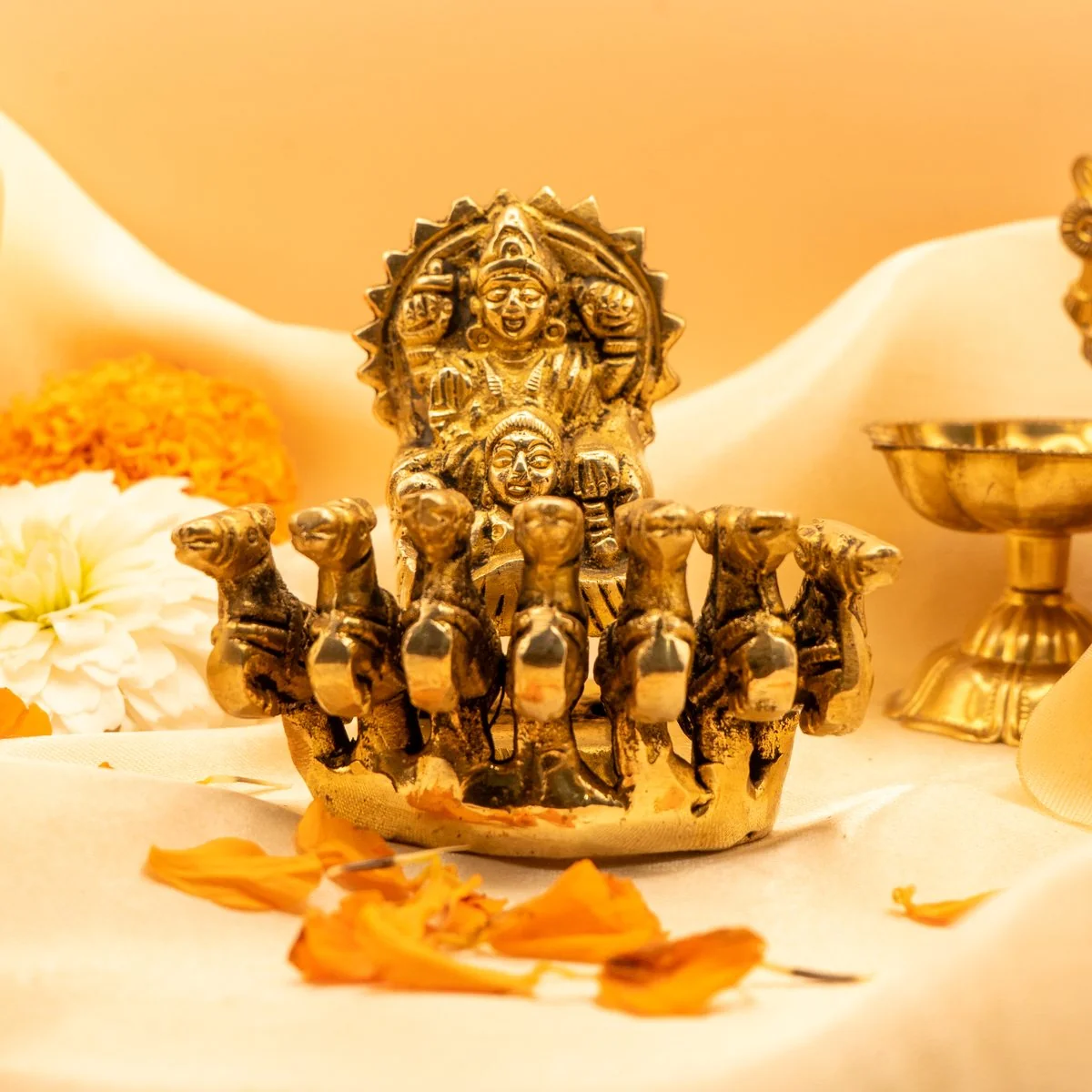
Because the festival is dedicated to the Sun, worship of Surya Dev becomes especially meaningful on Sankranti morning. A well-crafted brass Surya idol brings form, dignity and continuity to this worship. Families who want a temple-ready murti for home, gifting or retail display can explore the Deshna Wholesale brass idol catalog, where Surya Dev and other festival deities are available in devotional designs suitable for regular puja.
Why Makar Sankranti is spiritually important
The spiritual meaning of Makar Sankranti lies in movement from inertia to effort and from darkness toward illumination. In many households, the day is seen as the beginning of auspicious action. People take early baths, wear clean clothes, offer prayers to Surya, donate food and begin the day with sattvic discipline. Since Surya is the visible source of life, vitality, health and direction, his worship on this transition day is believed to strengthen confidence, clarity, discipline and inner radiance.
Vedic tradition also links Surya with authority, vision, reputation, immunity and the power to act without confusion. That is why devotees often pray to Surya Dev when seeking renewed energy, professional stability, better health and success in important work. A brass idol placed in the home mandir reminds the family that solar worship is not only for one festival morning; it can become a year-round discipline of gratitude, order and courage.
Brass Surya idol worship on Sankranti morning
On Makar Sankranti, the ideal worship begins at sunrise or shortly afterward. Clean the mandir space, spread a fresh cloth and place the brass Surya idol respectfully on a chowki or altar. Decorate the idol with red or orange flowers, kumkum, akshat and a small ghee lamp. If the idol depicts Surya on a chariot, the symbolism becomes even more powerful because the chariot represents movement, rhythm and divine control over time.
Many families begin the ritual with a simple sankalp, stating their name, family intention and prayer for health, prosperity and righteous progress. After this, devotees light incense, offer flowers and chant Surya mantras. If you are planning a customized festival arrangement or need matching deity sets for seasonal demand, the custom order page is useful for discussing size, finish and bulk requirements directly with Deshna Wholesale.
How to perform Surya Arghya correctly
The most recognized Makar Sankranti ritual is the offering of Arghya to the rising Sun. Fill a copper or brass lota with clean water. Many devotees add red flowers, roli, rice or a few sesame seeds to the water. Stand facing the rising Sun and slowly pour the water from the vessel while chanting Surya names or a simple mantra such as Om Suryaya Namah. As the water falls in a stream, one looks through it toward the sunlight, symbolizing humility before divine brilliance.
Arghya is both an external ritual and an inner practice. It teaches surrender of ego, gratitude for life and conscious alignment with truth. After Arghya, devotees often return to the mandir and offer additional prayer before the Surya brass murti, asking for health, discipline, right decisions and protection from lethargy, fear or repeated obstacles.
Sesame, jaggery and Sankranti offerings
Makar Sankranti is strongly associated with til and gur. Sesame represents warmth, purification and spiritual steadiness, while jaggery symbolizes sweetness, nourishment and social harmony. Offering sesame and jaggery before Surya Dev reflects the wish that speech become sweet, karma become pure and life become balanced. Many homes also prepare khichdi, laddoo, revdi, chikki and seasonal grains as part of the festive bhog.
Charity has a central place on this day. Donating sesame, blankets, food, grains or warm clothing is considered highly meritorious. Since Surya governs generosity and noble conduct, Sankranti becomes a beautiful occasion to combine personal worship with service toward others.
Recommended mantras for Surya worship
Devotees often recite short and long forms of Surya prayer depending on time and family tradition. The simplest mantra is Om Suryaya Namah, which can be chanted 11, 21 or 108 times. More elaborate recitations include the Surya Ashtakam and the revered Aditya Hridayam. These hymns praise Surya as the source of light, intelligence, courage and victory over weakness. Even one sincere recitation on Sankranti morning creates a deeply devotional atmosphere in the home.
If you maintain a brass Surya idol in the mandir beyond the festival, these mantras can be continued on Sundays throughout the year. This helps turn a seasonal celebration into a steady spiritual rhythm built around gratitude, light and disciplined living.
Uttarayan and regional celebrations
The beauty of Makar Sankranti is that it unites India through many regional forms. In Tamil Nadu, it is celebrated as Pongal, a thanksgiving festival for Sun, cattle and harvest. In Punjab, the eve is honored as Lohri with bonfires, songs and community joy. In Gujarat, Uttarayan is famous for kite flying, rooftop gatherings and festive sharing. In Uttar Pradesh and Bihar, many devotees observe holy bathing, khichdi daan and Surya worship at dawn.
Though customs differ, the spiritual center remains the same: gratitude for sunlight, harvest, movement and renewed auspiciousness. A Surya brass idol naturally fits this pan-Indian tradition because it offers a stable focus for prayer regardless of regional style.
Why brass Surya idols are ideal for year-round worship
Brass has long been preferred in Hindu worship because it is durable, dignified and suitable for repeated ritual use. A Surya idol in brass retains sharp detailing, shines beautifully in morning light and can be cleaned easily after daily or weekly puja. The metal also complements the solar symbolism of brilliance, warmth and sacred radiance. For retailers, temples and devotional stores, brass Surya murtis are especially relevant around Sankranti season, but their appeal continues throughout the year for Sunday worship and vastu-oriented spiritual spaces.
Deshna Wholesale, based in Khatauli, Muzaffarnagar, manufactures brass god idols for wholesale buyers, retailers and custom requirements across India. Before the festive rush, buyers can compare available designs in the online catalog and select Surya forms that match their audience, altar size and seasonal demand.
Final thoughts
Makar Sankranti is not only a harvest festival; it is a luminous reminder to live with direction, gratitude and renewed effort. Worshipping a brass Surya idol on this day connects the household with the visible source of life and the subtle qualities of courage, clarity and vitality. Through sunrise Arghya, sesame and jaggery offerings, Surya mantras and mindful prayer, devotees invite blessings that extend far beyond one morning. When the Surya murti remains in the home mandir, the spirit of Uttarayan stays alive all year as a daily call toward light.