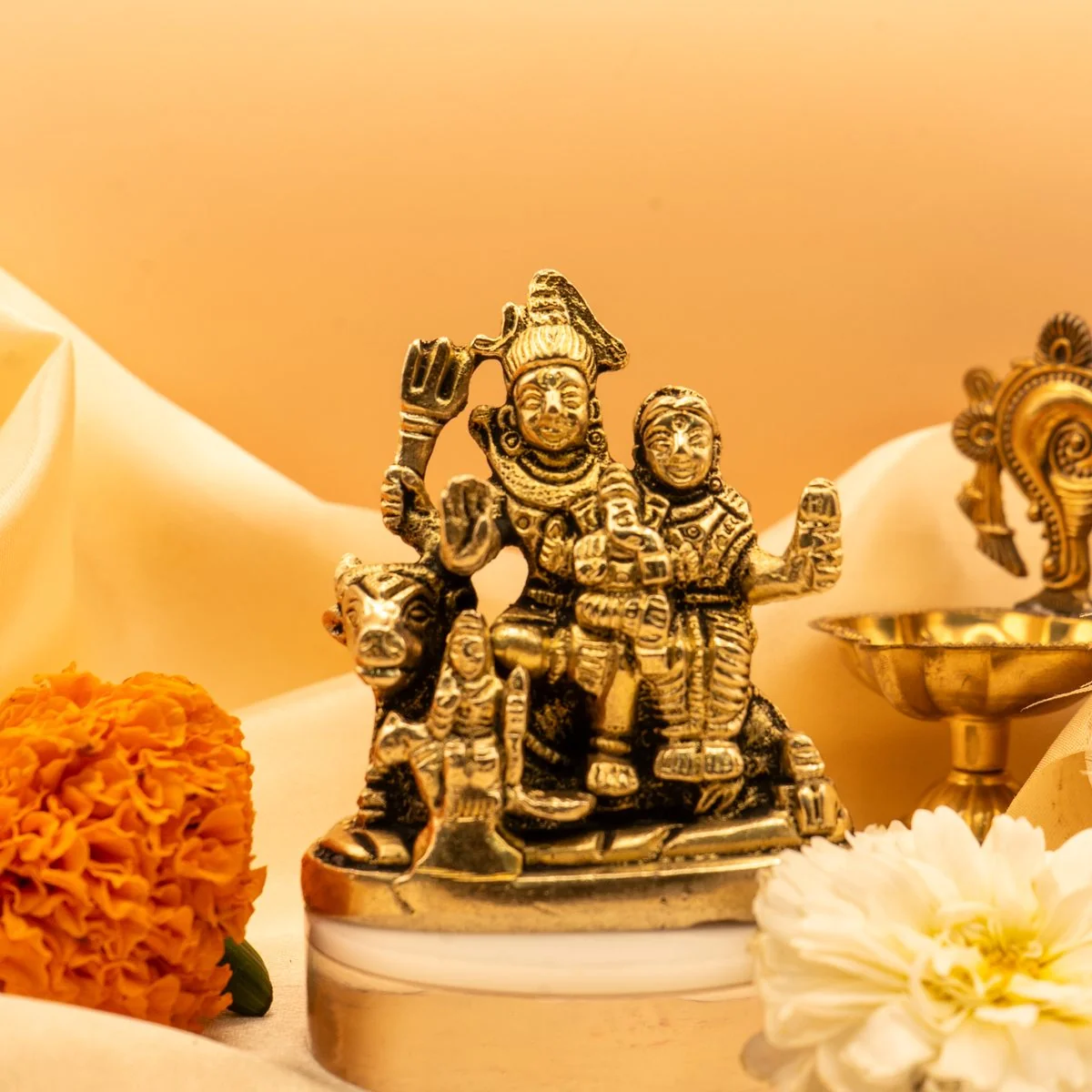
A home temple is more than a shelf of idols — it is a sacred space that reflects your family's spiritual identity. Choosing the right ensemble of brass deities, arranged according to tradition and Vastu, transforms a corner of your home into a genuinely powerful place of worship. When you curate your home mandir thoughtfully, selecting deities that harmonize with each other and positioning them with care, the spiritual energy of your home deepens. The right brass idol set becomes the devotional heart of your household.
The Foundation Trio — Ganesha, Lakshmi, and Your Kul Devata
Every Hindu home temple starts with three essential presences. First is Ganesha brass idols — the remover of obstacles who must always be worshipped first. No puja begins without invoking Ganesha. Second is Lakshmi brass idols, the goddess of prosperity, abundance, and wellbeing. These two form the universal foundation.
The third pillar is your family's kul devata — your ancestral or lineage deity. This could be a regional form of Shiva, Vishnu, Devi, or another deity traditionally worshipped by your ancestors. If you're unsure of your kul devata, consult elder family members or a family priest. Some families worship Hanuman, Durga, or a specific avatar like Rama or Krishna as their primary deity. This trio — Ganesha, Lakshmi, and your kul devata — forms the non-negotiable core of any complete home temple.
Traditional Sacred Ensembles by Tradition/Sampradaya
Your home temple's deity ensemble often reflects your family's spiritual tradition. Different sampradayas (denominations) favor specific sacred groupings:
Shaiva households center their worship around Lord Shiva. The complete Shiv Parivar ensemble includes Shiva (as Nataraja or Shivling), Parvati, Ganesha, and Kartikeya (Murugan). This family grouping creates a powerful sacred presence. Many Shaiva homes also include a brass Nandi, Shiva's vahana, positioned facing the Shivling. This is one of the most complete and harmonious deity sets available.
Vaishnava households place Vishnu or his avatars at the center. Popular ensembles include Radha-Krishna as the central pair, flanked by Ganesha and Hanuman. Alternatively, Lakshmi-Narayan forms the center, with supporting deities around them. Some Vaishnava homes include a small brass Garuda idol. Ram Darbar — featuring Rama, Sita, Lakshmana, and Hanuman — is another beloved complete set.
Shakta households worship the Divine Mother in her various forms. The Tridevi ensemble — Durga (or Kali) at center, flanked by Saraswati and Lakshmi — represents the three primary shaktis. Ganesha is positioned at the entrance or right side of the arrangement. This creates a balanced, powerful feminine energy in the home temple.
Pan-denominational or modern homes often take a more inclusive approach, combining deities from different traditions. The most common setup: Ganesha and Lakshmi as foundation, plus one or two ishta devatas (personally chosen deities) that hold special meaning for the family.
Can You Mix Deities from Different Traditions?
Yes, absolutely. It's very common in Indian households to have a mixed mandir. The key principles: Ganesha should always be present; avoid placing deities with opposing or rival energies together (though this is rare); face all idols in the same direction; and follow complete Vastu placement guide principles. A home temple with Ganesha, Lakshmi, Krishna, and Durga together is perfectly traditional and creates a beautiful, balanced spiritual presence.
Size Coordination — Creating Visual Harmony
A harmonious brass idol ensemble requires thoughtful size coordination. Your main deity or central focus should be the largest, typically 9-12 inches in height. Flanking or supporting deities should be slightly smaller, in the 6-8 inch range. Any secondary or tertiary deities can be 4-6 inches.
All idols should ideally rest on the same level, or your main deity can be slightly elevated on a small platform. The goal is a visual pyramid effect — the eye naturally travels to the central, largest figure. This creates both aesthetic beauty and proper spiritual hierarchy. Avoid having all idols the same size, as this creates visual confusion about the focal point of worship.
Recommended Complete Sets for Different Home Sizes
Studio or 1BHK apartment with a compact altar: A 2-idol set works best. Choose a 6-inch Ganesha and a 6-inch Lakshmi. This minimal but complete pairing addresses both obstacle removal and prosperity. Add your personal ishta devata photo or small murti if space permits.
2-3BHK homes with a medium-sized mandir: A 3-idol set provides completeness without crowding. Consider an 8-inch Ganesha, 8-inch Lakshmi, and a 9-inch main deity (Shiva, Krishna, Durga, or your kul devata) at center and slightly elevated. This creates a beautiful, balanced arrangement.
Dedicated puja room in a larger home: Here you can create a full sacred ensemble. Options include a complete Shiv Parivar (5 idols), or a Navgraha set plus Ganesha, Lakshmi, and your personal deity (7-9 idol arrangement). You have space for proper sizing, elevation, and ritual items. Browse our complete collection at browse brass idols for your home temple to design your ideal ensemble.
Arranging Your Brass Idol Ensemble — Vastu and Ritual Principles
Proper arrangement amplifies the spiritual power of your brass idol ensemble. Follow these principles:
- Position your altar facing east or north — these are the most auspicious directions
- Place Ganesha at the right side of the arrangement or at the entrance to the puja space
- Your main deity should be at the center and at the highest point
- Never place idols directly on the floor — use a wooden mandir, marble slab, or stone platform
- Leave space between idols so they don't touch each other — each deity needs its own space
- Keep puja items (lamp, incense holder, bell) to the right side of the altar
- Ensure the altar is at chest height or above when you're seated for puja
Check out more top 10 popular brass idols to complete your home temple collection.
Maintaining the Harmony of Your Home Temple
A complete brass idol ensemble requires regular care to maintain its spiritual and aesthetic power. Clean your idols weekly with a soft cloth. Perform a consistent daily puja, even if brief — lighting one lamp and offering one flower maintains the living connection with the divine. Seasonally, do a deeper clean with tamarind paste or brass polish to restore the original glow.
Replace faded flowers, old incense, and worn puja items regularly. The beauty of brass is that it grows more lustrous with age when properly maintained. Your brass ensemble, cared for with devotion, will become an increasingly powerful spiritual anchor for your family across generations.
Ready to create your complete home temple? Explore our curated brass idol collections and discover the sacred ensemble that speaks to your family's spiritual heart.