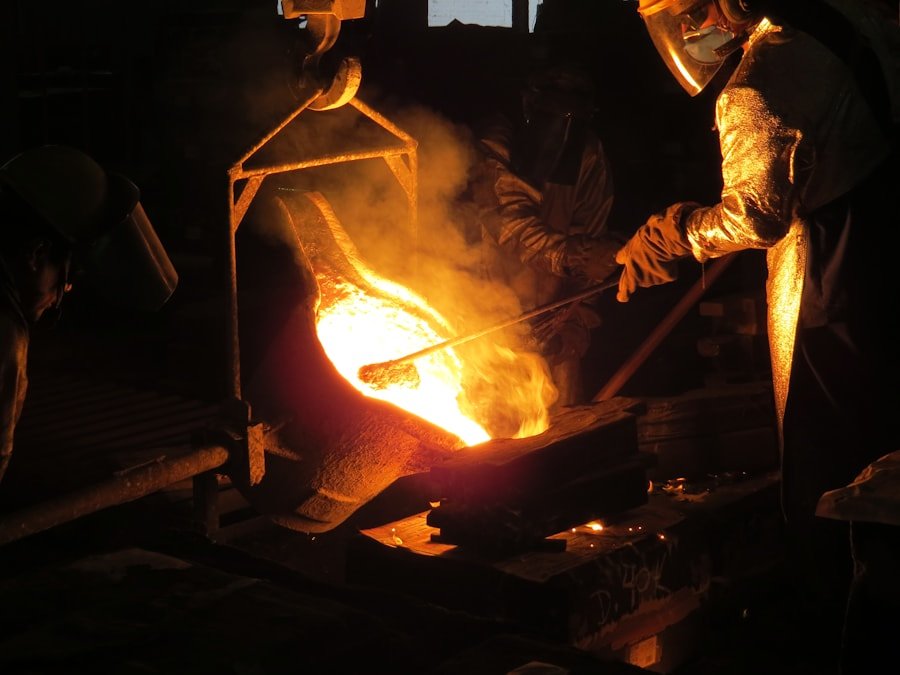
The brass idol manufacturing industry stands at a crossroads — centuries-old hand-casting traditions now exist alongside CNC milling, 3D-printed wax masters and high-pressure die casting. The question is: does technology enhance or diminish the art?
Traditional Hand-Casting — The Lost-Wax Process That Has Endured 4,000 Years
The lost-wax casting process has remained fundamentally unchanged for millennia. An artisan sculpts the original form in wax, capturing divine proportions and sacred iconography through skilled hands. This wax model is then encased in clay, melted out, and replaced with molten brass. After cooling and breaking away the mould, the craftsman hand-finishes every surface — chasing details, polishing, and refining expressions.
What makes this method remarkable is that each piece carries slight uniqueness. The human touch embedded in the wax sculpting phase means no two idols are perfectly identical. A master craftsman's understanding of sacred geometry, facial expressions, and ornamentation lives within the object itself. This is not mass production — it is the preservation of knowledge passed through generations of Khatauli artisans.
Modern Manufacturing Methods Entering the Brass Industry
Technology has introduced three significant alternatives to traditional hand-casting:
CNC Milling: Computer-controlled cutting machines carve brass idols directly from solid brass blocks. These machines follow digital designs with micron-level precision, producing identical pieces every time. CNC is particularly effective for geometric decorative items, flat relief work, and simple forms. However, the process is subtractive (removing material) and lacks the organic flow possible in casting.
3D-Printed Wax Masters: Instead of hand-sculpting wax, artisans now create digital 3D models and print them in castable wax resin. These printed masters then go through the same lost-wax casting process. This hybrid approach maintains traditional casting while digitizing the master creation phase.
Pressure Die Casting: Molten brass is injected into steel moulds under high pressure, allowing rapid production of thousands of identical pieces. This method dominates wholesale markets for simpler designs, offering speed and cost efficiency. However, the fine detail achievable in hand-cast work often exceeds what pressure die casting can produce, especially in facial features and intricate ornamentation.
What 3D Printing Has Changed in Wax Master Creation
Digital wax master creation has transformed prototyping speed dramatically. A design that might take weeks to hand-sculpt and refine can now be modeled digitally and printed overnight. Manufacturers can maintain digital archives of designs, scale them precisely to any size, and reproduce masters on demand without risking damage to an original.
Yet something is lost in translation. The micro-decisions an artisan makes while shaping wax — a subtle curve in the fingers, the exact depth of an expression, the organic irregularity that makes stone-cast metal feel alive — these emerge from embodied knowledge that digital modeling doesn't yet replicate fully.
What Technology Does Better Than Hand-Casting
- Dimensional consistency: Technology produces identical pieces across batches, crucial for wholesale orders requiring uniformity
- Production speed: CNC and die casting dramatically reduce manufacturing time from weeks to hours
- Cost efficiency: For simple designs in high volume, automated methods reduce per-unit costs significantly
- Digital archiving: Designs exist as permanent digital files, protected from loss or damage
- Precise scaling: A design can be reproduced at any size with perfect proportional accuracy
What Hand-Casting Does Better Than Machines
- Expressive subtlety: Human artisans capture devotional emotion in facial features that machines struggle to replicate
- Fine surface detail: Hand-chased textures in clothing, jewelry, and hair exhibit depth impossible in machined work
- Iconographic adaptation: Skilled artisans can adjust proportions and attributes to match specific regional traditions
- Finishing quality: Hand-polishing and patina work create surfaces with character and depth
- Sacred authenticity: For ritual use and prana pratishtha (consecration), traditionally crafted idols hold cultural and spiritual significance
- Artisan preservation: Supporting hand-casting sustains master craftsmen and intangible cultural heritage
The Hybrid Approach — How Khatauli Manufacturers Are Adapting
Rather than choosing between tradition and technology, many Khatauli workshops have adopted a hybrid model. They use 3D-printed wax masters for consistency and efficiency, but retain hand-finishing and hand-chasing for quality and character. This approach delivers the best of both worlds — production reliability with artisan expression.
At Deshna Wholesale, we follow this philosophy. Our manufacturing partners employ quality-controlled production methods while ensuring experienced artisans finish every piece. The result is brass idols that meet strict quality standards while preserving the hand-crafted character wholesale buyers and temples expect.
Should You Care How Your Brass Idol Was Made?
The answer depends on intended use. For ritual and devotional purposes — especially idols destined for temple installation or home worship — traditionally cast or hybrid hand-finished pieces are strongly preferred. The cultural authenticity, artisan touch, and suitability for consecration rituals matter significantly in these contexts.
For purely decorative applications, the manufacturing method matters less than the final aesthetic and build quality. Both traditionally cast and modern methods can produce beautiful decorative pieces.
When sourcing wholesale, ask these questions: Was the master hand-sculpted or digitally created? Is the piece hand-finished? What is the brass composition? Understanding these factors helps you match manufacturing method to your customers' needs and price expectations.
Ready to explore brass idols crafted with both tradition and precision? Browse Deshna Wholesale's hand-finished brass idols or commission a custom brass idol crafted to your specifications.