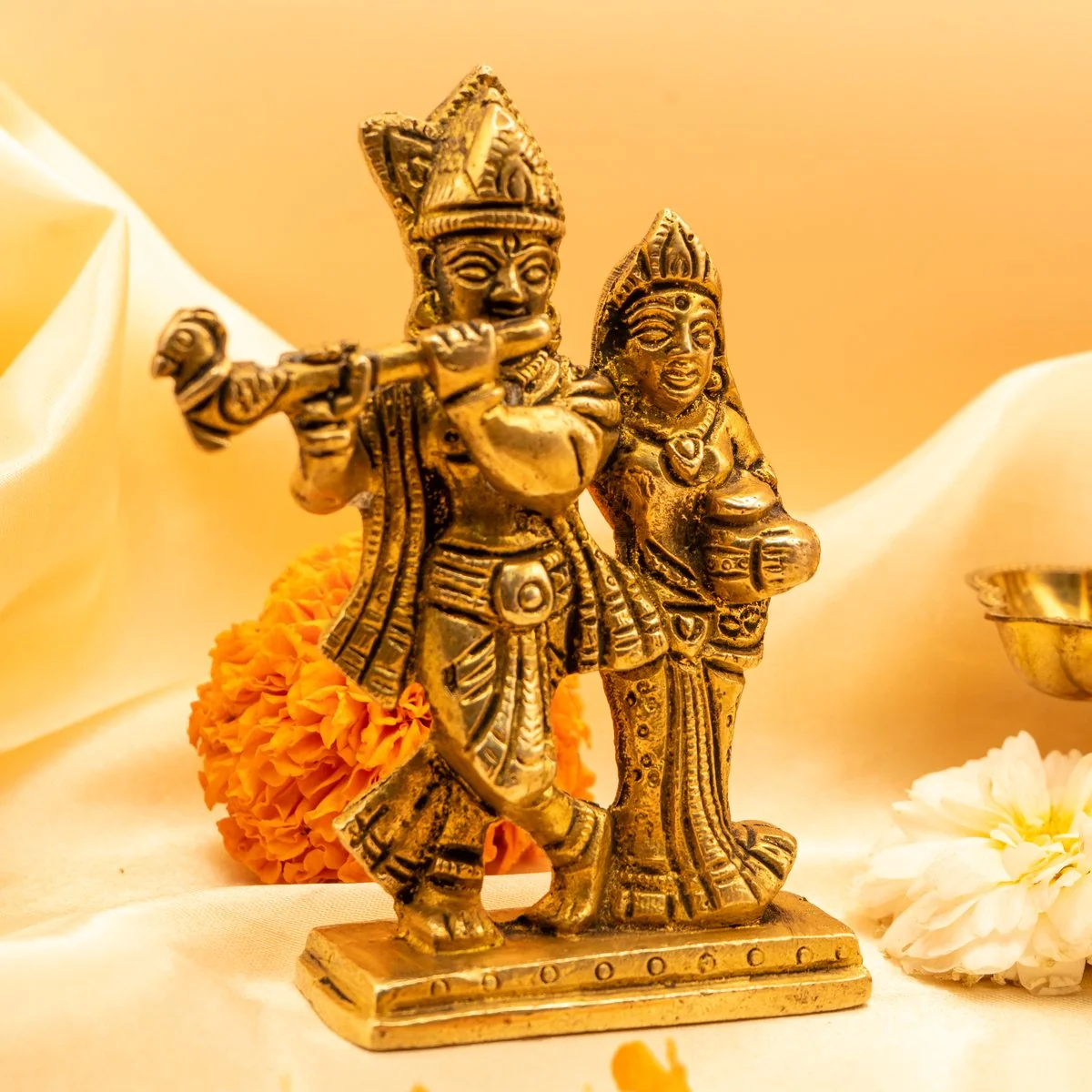
Water is an essential element in Hindu puja rituals, used for abhishek (ritual bathing) and offerings to deities. However, while water holds deep spiritual significance, prolonged or improper water exposure can seriously damage brass idols. Oxidation, mineral deposits, and corrosion can develop over time, affecting both the appearance and structural integrity of your sacred brass murtis. Understanding how water damages brass and learning proper care techniques will help you preserve your idols for generations.
How Water Damages Brass Idols
Brass is an alloy of copper and zinc, and while it''s durable, it reacts chemically with water and moisture in several harmful ways:
Oxidation: When brass stays wet, oxygen in the water reacts with the copper in the alloy, forming copper oxide. This creates dark brown or black tarnish that dulls the idol''s shine.
Mineral deposits from hard water: Tap water contains calcium, magnesium, and other minerals. When water evaporates on brass surfaces, these minerals are left behind as white, chalky deposits that bond tightly to the metal and are difficult to remove.
Verdigris from standing water: If water pools on brass for extended periods, especially in humid conditions, it can form verdigris—a toxic green or blue-green coating caused by copper carbonate. This corrosion can pit and permanently damage the brass surface.
Damage to gold or antique finishes: Many brass idols have special finishes—gold plating, antique patina, or hand-applied color. Water exposure can cause these finishes to peel, flake, or discolor, ruining the aesthetic value and requiring expensive restoration.
Types of Water Exposure and Their Risks
Abhishek (Ritual Bathing) — Daily Risk
Regular abhishek is a beautiful devotional practice, but it''s also the most common cause of gradual brass damage. Many devotees pour water, milk, or panchamrit over idols during daily puja, then leave the moisture to air-dry. Over weeks and months, this repeated wet-dry cycle accelerates oxidation and mineral buildup. The key is not to avoid abhishek, but to dry the idol properly immediately afterward.
Flood or Accidental Submersion
Unexpected flooding from monsoons, plumbing leaks, or accidents can submerge brass idols for hours or days. This is the most severe water damage scenario. Complete submersion, especially in dirty or contaminated water, can cause rapid oxidation, heavy mineral crusting, and deep verdigris formation. Idols with hollow interiors may trap water inside, continuing to corrode from within even after the outside is dried.
Condensation and Humidity
Even without direct water contact, brass idols in humid climates or poorly ventilated puja rooms can accumulate condensation. Morning dew, steam from cooking or bathing, and seasonal humidity all contribute to surface moisture that promotes tarnish and patina. This slow, invisible damage often goes unnoticed until significant discoloration appears. For more information on controlling humidity, see our guide on humidity control in your puja space.
Preventing Water Damage During Puja
Prevention is always easier than repair. Follow these practices to protect your brass idols during water-based rituals:
- Dry immediately after abhishek: Use a soft, absorbent cotton cloth to thoroughly dry all surfaces of the idol right after ritual bathing. Pay special attention to crevices, folds in garments, and the base where water pools.
- Use filtered or soft water where possible: Hard water leaves more mineral deposits. If available, use filtered, distilled, or boiled-and-cooled water for abhishek to reduce mineral buildup.
- Avoid leaving water pooled at base: Water often collects in the idol''s base or platform. Tilt the idol gently to drain water from hollow areas, and wipe the base platform completely dry.
- Dry the base platform too: Don''t forget the wooden or metal platform on which the idol sits. Standing water underneath can damage both the idol and the platform, and can wick moisture back up into the brass.
What to Do If Your Idol Gets Soaked
If your brass idol has been accidentally submerged, flooded, or left wet for an extended period, act quickly:
- Remove from water immediately: The longer brass stays wet, the worse the damage. Retrieve the idol as soon as possible.
- Pat dry with soft cloth: Use clean cotton towels or microfiber cloths to blot all surfaces. Don''t rub aggressively, as this can scratch softened or corroded brass.
- Use hairdryer on low: Speed up drying with a hairdryer set to low or cool. This helps evaporate moisture from hard-to-reach crevices and hollow interiors.
- Check for white mineral deposits: Look for chalky white spots or streaks left by evaporated water. These need to be removed to prevent bonding permanently to the brass.
- Check for green spots: Inspect carefully for any green or blue-green verdigris. If present, you''ll need to remove green patina before it spreads.
- Apply thin oil coat after fully dry: Once completely dry, apply a thin layer of coconut oil, mustard oil, or brass polish to protect the surface. Learn more about protective oiling after cleaning.
Removing White Mineral Deposits (Hard Water Stains)
White mineral deposits from hard water are common and can usually be removed with a diluted white vinegar solution. Mix one part white vinegar with three parts water, dampen a soft cloth, and gently wipe the affected areas. The mild acid in vinegar dissolves calcium and magnesium deposits. Rinse with clean water and dry immediately.
Caution: Be very careful with antique finishes or gold-plated idols. Vinegar can damage delicate finishes. Test on a small, inconspicuous area first, or consult a professional restorer for valuable or antique pieces.
Long-Term Recovery from Flood Damage
Severe flood damage may require multiple cleaning and polishing sessions over weeks. After initial drying and cleaning, monitor the idol for signs of ongoing corrosion. If green patina reappears, repeat cleaning. Gradually restore the brass''s luster with gentle polishing using tamarind paste, lemon-salt paste, or commercial brass polish. Be patient—rushing aggressive polishing can scratch or wear down brass, especially if the surface was weakened by corrosion.
When Water Damage Is Too Severe
In rare cases, water damage may be too extensive to repair fully. Deep pitting, structural weakness, or loss of fine details may mean the idol cannot be restored to its original condition. If your idol has suffered irreversible damage, consider it a reminder of impermanence and an opportunity to honor the deity with a new murti. You can browse our brass idol collection to find a replacement that resonates with your devotional practice.
Protect your brass idols from water damage with proper care after every puja. A few moments of mindful drying will preserve their sacred beauty for decades to come.